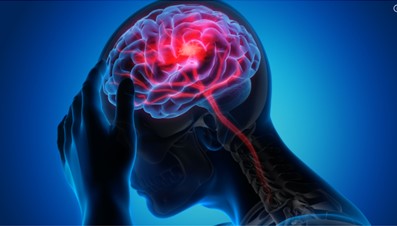
A research team has revealed how this protein worsens the damage caused by a stroke—a discovery that could improve brain recovery.

High levels of the protein DKK1 (Dickkopf-1) in the bloodstream of people who have suffered a stroke are associated with a poor short- and long-term prognosis. A team from Université Laval has uncovered the protein’s mechanism of action and its role in stroke severity. The study, published in the journal Brain, Behavior, and Immunity, thus opens the door to new therapeutic approaches.

The protein DKK1 blocks specialized brain mechanisms that help regulate vascular stability and inflammation. “It really sits at the intersection of inflammation, vascular dysfunction, and brain function, which is why we were interested in studying it,” explains Ayman ElAli, professor in the Faculty of Medicine and researcher at the CHU de Québec–Université Laval Research Centre, who led the study

read the article on Ulaval Nouvelles
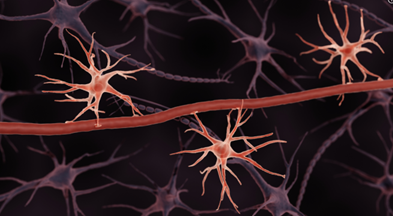
A study reveals how physical activity and a favorable living environment stimulate the production of a protein essential to vascular health, reducing the harmful effects of stress and preventing depression.

A research team at Université Laval may have identified why physical exercise and living under favorable socioeconomic conditions reduce the risk of depression. In laboratory animals exposed to chronic social stress—one of the main causes of depression—physical activity and an enriched environment helped maintain the integrity of the blood–brain barrier in brain regions associated with mood and emotional regulation. The findings, recently published in Nature Communications, highlight the key role played by a brain protein, Fgf2, in this protective mechanism and its potential as a biomarker for mood disorders.

“The blood–brain barrier has multiple lines of defense made up of different types of cells that are not tightly joined together. What seals the gaps between the cells in the first line is the protein claudin-5. Without it, the barrier loses its impermeability,” explains the study’s lead author, Caroline Ménard, rofessor at the Faculty of Medicine at Université Laval and researcher at the CERVO Research Centre.

Read the article in French at Ulaval Nouvelles

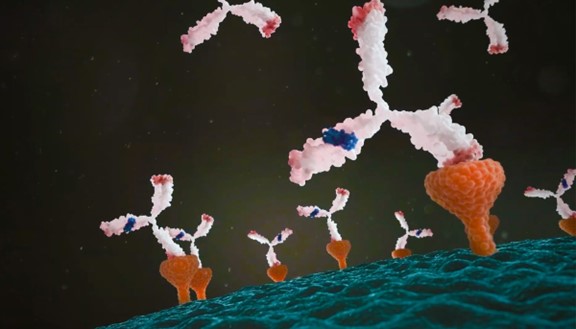
A research team has developed a new drug that blocks antibodies involved in a disease related to multiple sclerosis.

A study published today in the journal PNAS demonstrates that it may be possible to slow the progression of certain autoimmune diseases using drugs that interfere with the antibodies responsible for these conditions. In mice affected by an autoimmune neurological disease, such a drug reduced symptom severity and restored some functions, including mobility.

“This proof of concept paves the way for a new range of treatments for autoimmune diseases,” says the study’s lead investigator, Luc Vallières , Professor in the Faculty of Medicine at Université Laval and researcher at the CHU de Québec–Université Laval Research Centre.

Read the article: Ulaval Nouvelles

A team has developed a protocol to more objectively assess the functional consequences of intolerance to loud sounds.

Intolerance to loud sounds — hyperacusis — has a subjective nature that complicates both diagnosis and research on this auditory disorder. Indeed, clinicians must rely on self-assessments from affected individuals to determine how much the condition interferes with their daily activities. However, an experimental protocol developed by researchers at Université Laval could help reduce some of this subjectivity, suggests an article recently published in the scientific journal Hearing Research.

Hyperacusis is believed to affect between 4% and 17% of the adult population. “It is increasingly recognized as an auditory disorder, even though there is no scientific consensus regarding its definition,” notes the study’s lead author, Philippe Fournier, professor at the School of Rehabilitation Sciences and researcher at the Interdisciplinary Research Center on Rehabilitation and Social Integration at Université Laval.

read the article on Ulaval Nouvelles

What if amyotrophic lateral sclerosis (ALS) were also a metabolic disease? This is the question raised by a research team led by Chantelle Sephton, professor in the Faculty of Medicine at Université Laval and researcher at the CERVO Research Centre. Their work using a mouse model suggests that the way nervous system cells use energy contributes to the death of motor neurons in the brain and spinal cord.

Read the article on Ulaval Nouvelles

Professor Matthias Pepin and postdoctoral fellow Roxane Hoyer explain attention-deficit disorder, its growing prevalence, and its effects in the entrepreneurial world.

As part of Global Entrepreneurship Week, an expert in entrepreneurial mindset and a neuroscience researcher teamed up to analyze an intriguing fact: the slightly higher incidence of attention-deficit/hyperactivity disorder (ADHD) among entrepreneurs.
Matthias Pepin, professor in the Faculty of Business Administration, and Roxane Hoyer, postdoctoral fellow in the Faculty of Medicine, examine the effects that ADHD can have on an entrepreneurial journey.

Read the article on ULaval Nouvelles

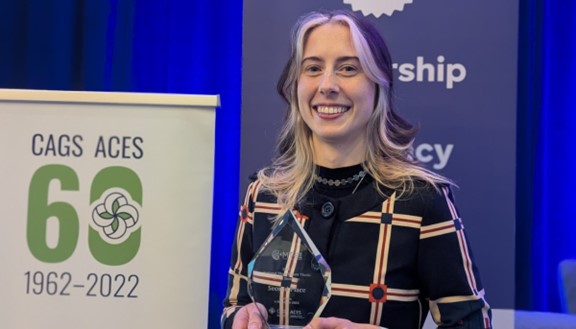
Doctoral student Michelle Janusz, the first member of the community to advance this far in this science-communication competition, shares her creative process for captivating the public.

Michelle Janusz, a PhD student in electrical engineering at Université Laval, won second place at the national finals of the Three Minute Thesis competition, the English-language counterpart of Ma thèse en 180 secondes. The event, organized by the Canadian Association for Graduate Studies, was held on November 6 in Ottawa.

This achievement qualifies her for the North American grand finale, which will take place in Washington, D.C., on December 6 as part of the annual Council of Graduate Schools conference. She is the first Université Laval contestant ever to reach this stage of the competition.

Her presentation, titled “Silencing the Alarm: A New Approach to Chronic Pain,” compares chronic pain signals to a faulty alarm system. In it, she explains her project: an implant that uses light to activate and deactivate specific nerves in the spinal cord to stop the transmission of pain signals.

Read the article on Ulaval Nouvelles.

This decline also affects people with neurodegenerative diseases such as Parkinson’s disease and individuals who have experienced a stroke.

When you speak with older relatives, do they sometimes seem unmoved by your sadness or indifferent to stories about events that amazed you? If so, don’t hold it against them—this lack of reaction may be explained by the fact that the ability to understand emotions conveyed through vocal modulations decreases with age. This is what a study recently published in the Journal of Speech, Language, and Hearing Research by a Université Laval research team has shown.

The research team reached this conclusion after comparing the ability to decode affective prosody in young adults and older individuals. “Affective prosody is the acoustic modulation of the voice that allows emotions to be conveyed. It is more important in daily life than we realize because, just like words, facial expressions and gestures, it carries essential information for communication,” explains the lead author of the study, Laura Monetta, professor at the School of Rehabilitation Sciences and researcher at the Interdisciplinary Research Centre in Rehabilitation and Social Integration at Université Laval.

Read the article on Ulaval nouvelles

This international recognition was awarded to him for his discoveries on chronic pain and the functioning of the central nervous system.

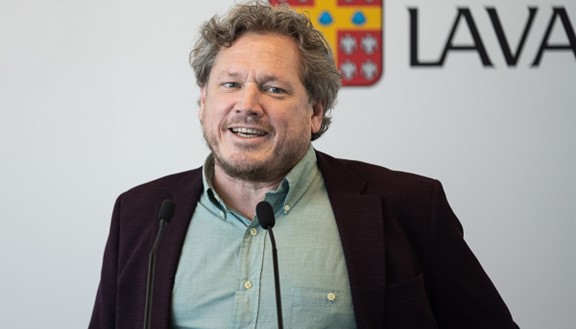
Yves De Koninck, Full Professor in the Department of Psychiatry and Neuroscience at the Faculty of Medicine and Director of the CERVO Research Centre, has been awarded the 2025 Unité-Guerra-Paul-Beaudoin-Lambrecht-Maiano Prize.

This distinction was granted in recognition of his groundbreaking work demonstrating that chronic pain results from a dysfunction of the central nervous system and therefore constitutes a disease in its own right. This discovery marks a major turning point in the understanding of pain and opens the door to new therapeutic approaches.

The prize, unanimously awarded by the jury, will be presented to Professor De Koninck during a ceremony to be held on January 27, 2026, at the Institut de France in Paris.

Read the article on Ulaval Nouvelles.

The ineffectiveness of this intervention serves as a reminder that research is still far from finding a satisfactory solution to chronic back pain.

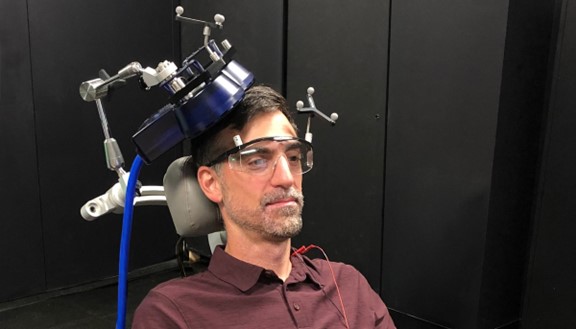
Transcranial magnetic stimulation (TMS) is a promising therapeutic approach for many ailments that affect us, but unfortunately it may not be the long-awaited remedy for chronic back pain. This is suggested by a study published in the Journal of Orthopaedic & Sports Physical Therapy by a research team led by Professor Hugo Massé-Alarie from the Faculty of Medicine and the Interdisciplinary Research Centre in Rehabilitation and Social Integration at Université Laval.

Read the article on Ulaval Nouvelles.