We invite you to view the CERVOTube video of the week, featuring Valérie Pineau-Noël, who works with Daniel Côté and Paul De Koninck. In this video, she explores HiLo microscopy to study neuronal activity.
We invite you to view the CERVOTube video of the week, featuring Valérie Pineau-Noël, who works with Daniel Côté and Paul De Koninck. In this video, she explores HiLo microscopy to study neuronal activity.
A change in the shape of the protein parkin in a key region of the brain may contribute to dopamine loss, according to a study.
For more than 50 years, Parkinson’s disease has been associated with a loss of dopamine, a neurotransmitter that is essential for the control of movement. A study conducted at Université Laval suggests that a transformation of the brain protein parkin may contribute to this loss and play an important role in the progression of the disease. This discovery offers a new avenue for the development of treatments.
The authors of the study, published in the journal npj Parkinson’s Disease and affiliated with Université Laval, are Cyntia Tremblay, Laura Pshevorskiy, Rosalie J. Cottez, Hélèna L. Denis, Vincent Emond, Marc Morissette, Thérèse Di Paolo, and Frédéric Calon.
Read the article on Ulaval Nouvellees
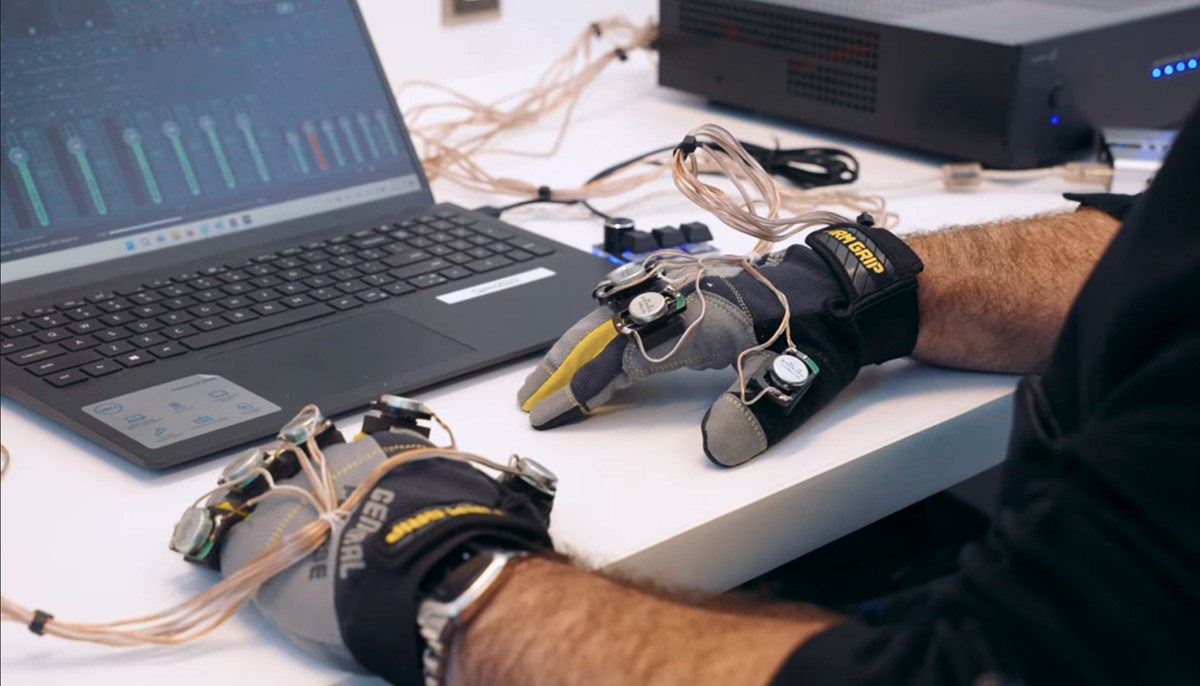
By transmitting sound to the fingers, this technology could help people with hearing loss and support musicians in their daily practice.
Listening to music with your hands may sound like science fiction, but a team at Université Laval is working on some very special gloves. They are capable of transmitting sounds as vibrations directly to the fingers using small speakers. “You could put the piano on the thumb and the flute on the little finger,” explains Andréanne Sharp, a professor in the Faculty of Medicine and researcher at the CERVO Research Center, who leads the project.
The technology, developed in collaboration with Professor Jérémie Voix from the École de technologie supérieure (ETS), relies on activating brain areas associated with each finger to add a “tactile cue” to hearing. The musical experience is not the same as listening with our ears, the professor notes. She compares the sensation of the gloves to placing your hands on a speaker and feeling vibrations through your body.
The gloves could be used by people with hearing loss as a complement to hearing aids or cochlear implants. “It can sometimes be difficult for them to clearly understand speech or music in noisy environments, even with their devices,” says Professor Sharp, an audiologist by training and a musician by passion.
Read the full article on Ulaval Nouvelles.

Read the article (French) on Ulaval Nouvelles
A study conducted at Université Laval highlights how compulsive video game use can exacerbate certain symptoms of psychosis and interfere with treatment.
In individuals experiencing a first episode of psychosis—such as hallucinations or social withdrawal—co-occurring conditions may emerge and hinder recovery. Video game addiction is one such factor. The research underscores its prevalence in this population and emphasizes the importance of systematic screening to ensure appropriate, tailored interventions.
The study was led by Maxime Huot-Lavoie under the supervision of Marc-André Roy and Marie-France Demers, both affiliated with the Centre de recherche CERVO and the Institut universitaire en santé mentale de Québec.
The level of these molecules in the blood is linked to cognitive decline in people who have not yet received a diagnosis.
Once the diagnosis is made, it is too late to reverse Alzheimer’s disease. That is why identifying the earliest signs of cognitive decline is crucial. A team from Université Laval examined blood-based biomarkers and identified two promising molecules, according to a study published in Alzheimer’s & Dementia.
The scientists studied molecules associated with metabolic diseases, such as type 2 diabetes or hypertension, which are linked to a higher risk of developing Alzheimer’s disease. “We wanted to see how these metabolic biomarkers behaved in relation to cognitive changes,” explains Frédéric Calon, explains professor at the Faculty of Pharmacy and researcher at the Centre de recherche du CHU de Québec – Université Laval, who led the study
read the article: Ulaval Nouvelles
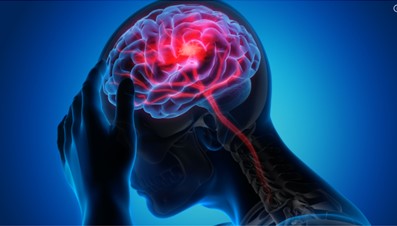
A research team has revealed how this protein worsens the damage caused by a stroke—a discovery that could improve brain recovery.
High levels of the protein DKK1 (Dickkopf-1) in the bloodstream of people who have suffered a stroke are associated with a poor short- and long-term prognosis. A team from Université Laval has uncovered the protein’s mechanism of action and its role in stroke severity. The study, published in the journal Brain, Behavior, and Immunity, thus opens the door to new therapeutic approaches.
The protein DKK1 blocks specialized brain mechanisms that help regulate vascular stability and inflammation. “It really sits at the intersection of inflammation, vascular dysfunction, and brain function, which is why we were interested in studying it,” explains Ayman ElAli, professor in the Faculty of Medicine and researcher at the CHU de Québec–Université Laval Research Centre, who led the study
read the article on Ulaval Nouvelles
© 2026 Neuro Québec. All rights reserved.